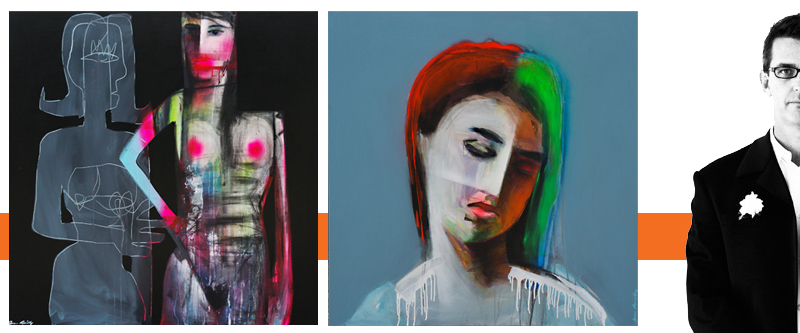
An Insight into an exhibition at Red Hill Gallery by Mel Brigg – article by Ashleigh Clarke

An insight into an exhibition held at Red Hill Gallery in 2010 as seen through the eyes of University Of Queensland Intern Ashleigh Clarke.

Mel has just been selected as a finalist in the 2012 Moran Art Prize  The winner will being announced on 24 July 2012.

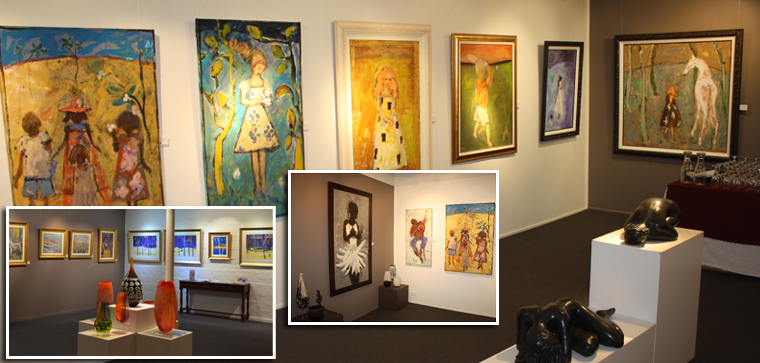
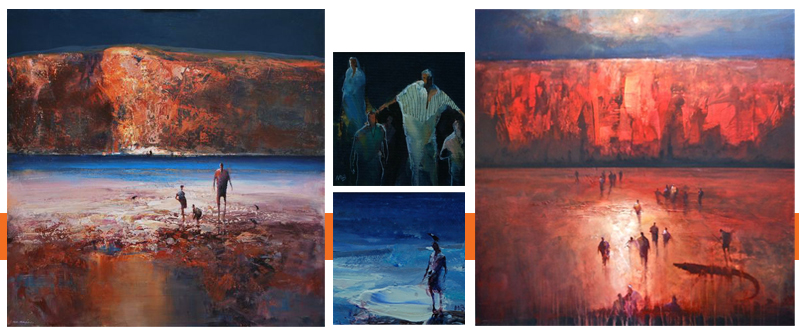
The exhibition ‘Emotive Moods’ by self taught and internationally acclaimed artist Mel Brigg is an eclectic mix of landscapes, seascapes, still life and portraiture. Simplistic and skilful in his application many of the pieces, while still stunning, are politically charged and thought provoking.

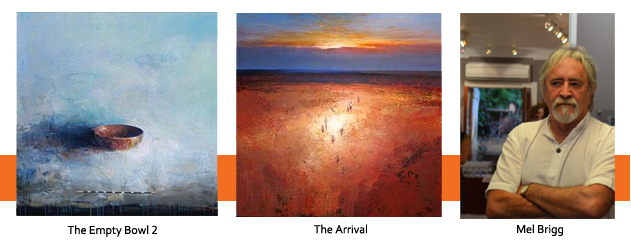
These traits in his artworks are seen in his famous ‘Bowl’ and ‘Exodus and Arrival’ series. Although there are quite a number of the large scale ‘Exodus and Arrival’ series there are only two of the ‘Bowl’ series present, the standout being the ‘Empty Bowl 2’. Painted in a style typical of Brigg, from afar the application of the paint provides more dimension and tenacity than the subject matter (which is just an empty bowl and porcupine quill). It is not until the viewer is up close that the political significance of this work is realised. Etched into the paint are the words “Mugabe’s legacy to South Africa, RIP”. Immediately the exhibition seems more than just pretty paintings.

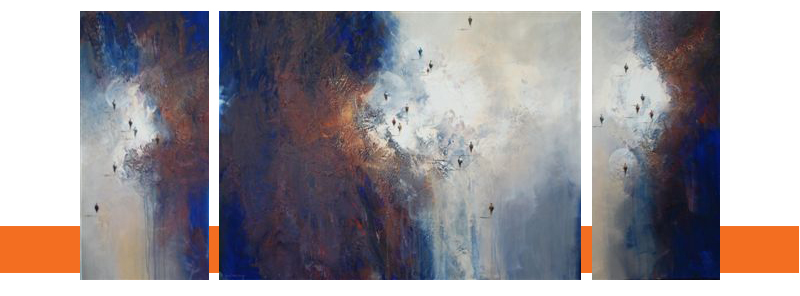
The ‘Exodus and Arrival ‘series are more a form of self-expression than a political statement. Originally from South Africa the move to Australia left Brigg feeling alienated, which was his inspiration for these series. While all are similarly composed there is something compelling about the works. Inspired by the colours of both countries the large-scale paintings generally depict baron landscapes in vivid colours with a number of small people walking either toward or away (it’s difficult to tell) from the horizon. These miniscule figures are completely dwarfed by their baron surroundings and accurately illustrate Brigg’s feeling of alienation

Another interesting aspect of this series is the repeated motif of a circle around a sole figure. Although the ring looks like the imprint of a rim of a glass, the ring itself is quite mysterious resulting in the age-old question of – what does it mean? Whether it is just a focal point in the painting or a signifier of an alienated figure (possibly Brigg himself?) is left up to the viewer to decide.

A fantastic exhibition, Brigg is a highly talented artist who has the intrinsic ability to accurately depict a range of emotions and moods in his works.
Written by:-  Ashleigh Clarke (Internship Red Hill Gallery October 2010)
Posted in Uncategorized | Comments Off on An Insight into an exhibition at Red Hill Gallery by Mel Brigg – article by Ashleigh Clarke

Artist in line for top prize – Damian Bathersby | 10th July 2012 | Sunshine Coast Daily

A CHANCE encounter with a stranger in a Nambour park has proven an unlikely recipe for success for artist Mel Brigg.

The Buderim painter has been named as a finalist in the 2012 Doug Moran National Portrait Prize – an honour he says came completely out of the blue.
“I’m over the moon but I don’t see myself as a portrait artist, so it’s come as a shock,” the 61-year-old former South African said.

“I’m definitely more of a landscape artist with a figurative content and for the last couple of years I’ve been concentrating on the movement of people from strife-torn areas of the world.

“I have done portraits before but I’ve never been commissioned to do one because I can’t paint pretty people.

“They have to have some interesting feature – the uglier the better.”

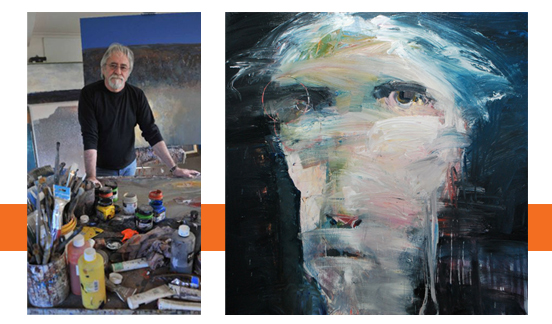
Mr Brigg’s successful work, entitled Joseph the Stranger, is of a man he met only briefly and has never seen since.

He was returning home from Eumundi with a load of canvases when he stopped in a Nambour park for a coffee.

“I saw this bloke walking towards me, looking weather-beaten and a bit sad and as he got closer I realised he was blind in one eye,” the self-taught artist said.

“He was a wild and woolly looking bloke.

“It looked like he’d had his nose broken a few times … a bit of a sad character.

“I suddenly realised I had to paint this man and I pulled a canvas out of the van and asked him to sit for me.

“He said I’d have to be quick as he had a doctor’s appointment, so I put the canvas on the grass and painted him using just my hand and a large brush.

“It was literally done in 10 minutes and he went on his way.

“I still have no idea who he was.”

The portrait Mr Brigg describes as “a bit rough and ready” is in the running to win him $150,000 in what is one of the nation’s most prestigious portrait competitions.

But he’s not expecting too much, admitting it’s probably not even one of his best pieces.

“This is certainly a major thing that has happened in my career but it’s not my best work,” he said.

“I wouldn’t be able to say what is my best work because that’s up to the people who buy them.

“Everyone who buys one likes to think they have my best piece.”

The winner of the 2012 Doug Moran National Portrait Prize will be announced in Sydney next week, before the finalists embark on a national tour.

Damian Bathersby | 10th July 2012 5:00 AM    | Sunshine Coast Daily

Posted in Uncategorized | Comments Off on Artist in line for top prize – Damian Bathersby | 10th July 2012 | Sunshine Coast Daily

ArtChat [Blog Interview Number 13] – David Hinchliffe

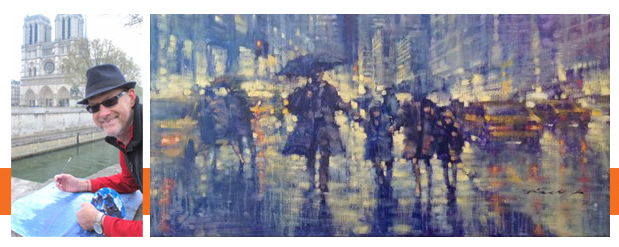
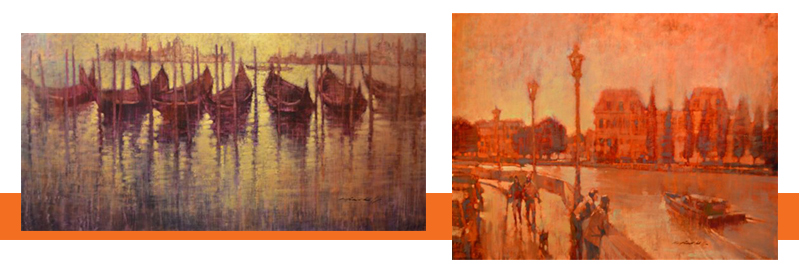
David Hinchliffe, retired Brisbane City Councillor, is an exceptional talent whose paintings are based on the streets, laneways, paths and urban settings of cities he loves, including Paris, New York, Venice, and his hometown, Brisbane. Since beginning painting at 12 years old, Hinchliffe has had more than 50 exhibitions throughout his 40-year art career, with his works held in private collections in America, the United Kingdom, and Australia.
AC:     David as a past councillor how hard has it been to change your hat from politician to artist?
DH:   
Six months ago, I would have said the transition would have been almost impossible. But the reality is the change has been instant and painless. That was then.  This is now. I haven’t looked back and I certainly don’t miss my old life.

AC:     Do you feel that your past profession has influenced you as a painter or your subject matter?
DH:    
Tennyson said in his epic ‘Ulysses’, “I am a part of all that I have met”. I think that’s essentially true of all of us.  Our experiences contribute to making us who we are today.  Politics has of course influenced me, but I was an artist before I became a politician and I think my art influenced my politics as much as vice versa.  It’s true that the ‘workplace’ for a local government representative is definitely the streets and the suburbs where your community lives and perhaps that’s why most of my current painting material is about streetscapes – so there is an overlap.

AC:     How do you choose your subject matter and decide on a final composition?
DH:  
My subjects are largely the streets of suburbs and cities I love, so in a sense they choose themselves.  What I look for is the play of light on the shapes and forms that inhabit streets.

AC:     Who or what inspired you to first pick up the paintbrush?
DH:  
My father painted as a young man and I’d have to say he was my first influence, but the French painters of the late 19th century were the ones who really excited my interest in the possibilities of paint.  An Australian influence has definitely been Jeffrey Smart because of the way he has taught us to view the ordinary as extraordinary.

AC:     Have you always painted the urban environment? What draws you to paint these scenes, what are you trying to capture?
DH:   
My earlier work was a combination of figurative and landscape and I still do work in both those subjects.   I’ve cruised through a range of themes over 30 years of painting and I’ve happily landed on the subject matter of streetscapes as my true painter’s passion.  I love the buzz and noise of cities and the play of both natural light and artificial light on the streetscape.

AC:     The current exhibition contains paintings of Venice, Paris, New York, Melbourne and Brisbane, why these cities and which is your favourite?
DH:    
The former politician in me suggests I should say Brisbane and certainly our city’s streets have their special light and charm, but how could anyone overlook the obvious pure beauty of Venice and Paris? I once rejected the notion of artists painting beautiful things.  I convinced myself that artists had to shine a light on the dark underbelly of society.  I’m happy to say I no longer have those angst-ridden pretensions.  I think there’s nothing wrong in celebrating beauty.

AC:     Do you have a particular process to get you into the ‘creative zone’?
DH:     
Deadlines certainly help spur me on, but good music is an obvious incentive.  Gershwin gets me into a New York state of mind, while Vivaldi makes me think of Venice and Piaf and Monsieur Camembert transport me immediately to the streets of Paris.

AC:     What music do you listen to while you paint?
DH:    
When it’s not Gershwin, Vivalid, Piaf or others, I’m happy listening to my son’s band Kooii, who play a combination of jazz/reggai/fusion.

AC:     Putting together the body of work for this exhibition must have taken up a lot of your time, what direction would you like to take your art?
DH:     
My art has taken a course all its own. I’m delighted after 25 years of hard work as a Councillor to contemplate spending the rest of my life painting full-time.  I just feel that I have so much painting, sketching and sculpting in me that I really look forward to devoting myself to that.

AC:     What does your art mean to you?
DH:    
What it means to me is really what it means to the people who buy it.  The positive response my work receives from buyers is such a change from life as a Councillor when the only people you hear from are your critics.

AC:     In one sentence describe your art to our readers.
DH:     
I take what I see and re-interpret it.

AC:     What is your favourite childhood memory?
DH:    
When we lived in Brisbane and drove back home to spend weekends with my grandparents in Toowoomba.

AC:     I’ve heard you drive a scooter, why and what colour is it?
DH:    
My retirement promise to myself was to buy a red scooter…the sort of thing no self-respecting Councillor would be seen dead on.

AC:     Share something about yourself that might surprise our readers
DH: 
    I am too discreet to divulge any secrets – that should surprise some readers!

AC:     Finally who are your top three favourite artists?
DH:     
I hate being so predictable but my favourite Australian artist would have to be Brett Whitley and, equally predictably the greats, Vincent Van Gogh and Pablo Picasso.
Exhibiting July 2012 at Red Hill Gallery – View the exhibition online here.

Posted in Uncategorized | Comments Off on ArtChat [Blog Interview Number 13] – David Hinchliffe

ArtChat [Blog Interview Number 12] – Tom Burke

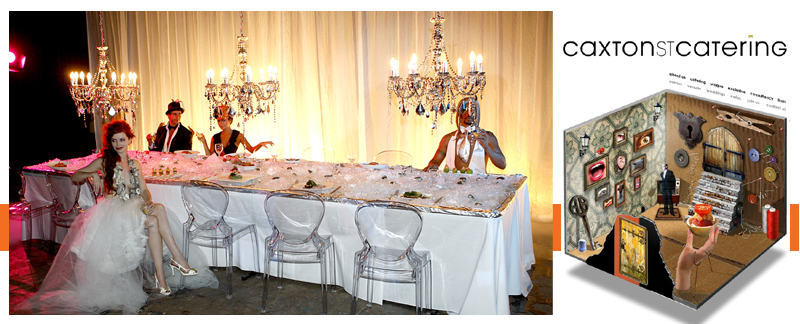
This month we are happy to present an insight into the life of one of Brisbane’s and Australia’s most sort after caterer.  A Gold Licence Caterer, Tom Burke from Caxton St Catering  is considered one of Australia’s leading culinary creators.  A member of the ISES (International Special Events Society) Tom is constantly redefining limits and pushing boundaries in the food world, which is why he is up there with Australia’s best.

Tom has catered for premier establishments such as QAGoMA, high profile events like the Bledisloe Cup and he has recently, for the 6th year in a row, been selected as the exclusive Australia wide VIP caterer for Cirque du Soleil .In our interview with Tom we have tried to delve into his life, snatch some industry secrets and gossip and of course chatted about his extensive art collection.

AC:     Tom you are obviously a hard working, dedicated and determined business man, how does it feel to be considered one of Australia’s best?|
TB:
A great compliment, though I impress that it is a team effort and I have been blessed over 20 years with great employees that understand my vision, deliver superbly, and ‘go that extra mile’.

AC:     You come across as very passionate about what you do, how did you get into the industry?
TB:     
There was not a masterplan or intent, it just evolved. After a career in Ragtrade in Australia I went overseas for 5 years and, out of necessity, gravitated towards the Hospitality Industry. When I arrived back I started to build to where I am today!

AC:     Where do you draw your inspiration to constantly push boundaries and create such innovative and visually pleasing dishes?
TB:     
My clients, everyone is different and each wants something different. To elect to have a catered function means that my client, private or commercial, wants something different with their personal stamp evident.

AC:     You seem to constantly be setting goals and smashing them, how do you stay focused? What drives you?
TB:       
Our Ethos at CSC is ‘you are only as good as your last job’ Personally, I am a Leo, I hate repartition, get bored quickly and have a fear of failure, throw in a healthy dose of Catholic guilt and you have it!

AC:     You’ve catered for an amazing array of clientele, what has been your favourite moment in your career so far?
TB:     
After 20 years there are quite a few though every time you complete an event that was larger or more complex or more strategically daunting than the previous, there is huge satisfaction.

AC:     Your company caters for every occasion from corporate events to weddings, do you have a favourite event you enjoy catering for the most?
TB:     
Sometimes you click with a client and you ‘get’ what they want – you deliver the dream! They are the favourite!

AC:     You watch chef’s like Heston Blumenthal create the weirdest and wackiest dishes, do you have any similar experiences where you have been gobsmacked at what the clients have requested?
TC: 
Constantly!

AC:     As a world-class caterer I’m sure you’ve had your fair share of culinary experiences; do you have a favourite meal or most memorable meal?
TB:     
I have had quite a few, though I think it is very rare when the worlds collide and the food, the setting, the ambience and the company are at one.

AC:     Your website is a clear indication of your playfulness, originality and creative flair, do you appreciate art as much as you do food?
TB:     
Absolutely!

AC:     How do you feel about your work being considered as art, is this something you agree with?|
TB:     
I think it is taking it too far! Creative, yes! Sensory, totally! Art, no! We create for the moment.

AC:     Do you have a favourite artist or art period/style that you enjoy the most? Why do you think you identify with this work/style?
TB:      Modern Art! The sculptor Alexander Seaton.

AC:     You’ve catered for QAGoMA as well as the Bledisloe cup events, does the catering differ between these audiences very much? Give us a little insight into what needs to be considered when catering for art lovers and rugby fanatics.
TB:     
So close but yet soooo far away!  For a Sports Event we are under strict time lines…..you cannot miss the start of a game!

AC:     How would you describe yourself in three words?
TB:     Committed, Excitable, Eye to detail.

AC:     You’re clearly a very busy man and highly sort after, what do you do to unwind when it all gets too much?
TB:     
Lock myself away with a good Serial killer Book.

AC:     Do you have a celebrity idol or chef that you admire?
TB:     
Tetsuya

AC:     I’ve heard you are a bit of an art collector, what do you look for when buying art and how do you decide on a particular piece?
TB:     
Comes from a connection, I tend towards sculpture. Most of the Art I have is modern and quite bold.

AC:    Do you have any tips for people considering buying art for the first time?
TB:     
You like it buy it! If you don’t have a place for it now, you will. If you buy with a passion for a piece it has a calming affect which, at unexpected times, excite you.

AC:     And finally, what is your take on the nation’s current food craze? From Masterchef to MyKitchenRules it seems that every second person these days considers themselves a foodie… has this genre of popular culture affected you or the industry in any way?
TB:   
I cannot stand it! It gives such falsehoods of the industry and it denigrates trained chefs who have studied and worked for many years to get where they are today.

RELEVANT LINKS:
Cirque Du Soleil
Exclusive National Caterer – Tapis Rouge
Member Brisbane Marketing

Member ISES Queensland
Member Meetings & Events Australia 
Caterer to the Gallery of Modern Art & Qld Art Gallery

Posted in Uncategorized | Comments Off on ArtChat [Blog Interview Number 12] – Tom Burke

Learning through actions: my internship experience – By Tegan Enright

Queensland University of Technology – Bachelor of Creative Industries (Interdisciplinary)

After enjoying a unit in visual display within the arts, I was inspired to seek an internship position at an art gallery to expand my knowledge of display and curation. Having experience within the retail industry and a passion for art, I naturally thought that a commercial gallery would be perfect for me. Impressed by the quality of not only the art, but the customer service as well, I was drawn towards the Red Hill Gallery.

It is the aim of the internship programme to provide students with the opportunity to not only experience working within their field of study, but to transition and relate learnt knowledge into a workplace environment. During my time at the gallery, I found myself learning much more than I had anticipated. Mirroring Elizabeth A. Smith’s (2001) notions on the role of tacit and explicit knowledge in the workplace, the gallery offered me the opportunity to learn tacit knowledge by providing me with face-to-face and ‘hands-on’ methods which conveyed industry knowledge and ‘know how’.

Within my proposed role as a gallery assistant, I contributed to the day to day running of the gallery. As a practical worker, I was pleased to discover how hands-on the duties were and found that I learnt a lot about retail galleries by participating in practical tasks. In learning from Action: A Conceptual Framework, Miriam Hutton (1989) explores the notion of learning through action and states that during her search to create a strong educational programme, she ‘wanted an approach to learning which could enable people to act and to learn at the same time’. This strongly related to my experience as I learnt a lot from my actions and was able to relate and use my academic knowledge within a practical environment.

Not only have I learnt that there is a lot more to a commercial art gallery than I initially thought, I have discovered my own views of selling art and strengthened my professional confidence. I immensely enjoyed my time at the gallery and I am pleased to say that I was successful in reaching my aims of increasing my knowledge of local artists and developing my visual display skills. I would like to thank the ladies of the gallery for providing me with such a warm and educational experience, thank you.

References:

Hutton M 1989. ‘Learning from Action: A Conceptual Framework’, in SW Weil & I McGill (eds), Making sense of experiential learning: diversity in theory and practice, Milton Keynes, The Society for Research into Higher Education and OUP, pp.50-59.

Smith EA 2001, ‘The role of tacit and explicit knowledge in the workplace’. Journal of Knowledge Management, ProQuest Central, vol.5, 4, pp. 311-321.

Posted in Uncategorized | Comments Off on Learning through actions: my internship experience – By Tegan Enright

ArtChat [Blog Interview Number 11] – Todd Whisson

Todd Whisson creates an impression at Red Hill Gallery.

His works have received an outstanding amount of attention, the consideration of light and colour within his paintings are a breath of fresh air.

For an artist, Todd Whisson is a late bloomer.  Despite being the son of a professional artist, and childhood memories steeped in the scent of paint, Todd only began painting in his early twenties.  His latest collection exhibiting at Brisbane’s Red Hill Gallery in June 2012 is an excellent example of being ‘better late than never’.

When Todd decided to give up his job as a framer in 2003 to become a full-time artist, he drew on his fascination with French Impressionism and tailored his own approach to suit the spectacular coastal scenery and landscapes of Queensland, New South Wales and Victoria, the beauty of Todd’s work is his commitment to new interpretations of old techniques.

For Todd to have achieved such success in a few short years certainly makes him an artist to watch in the future.
AC:  What inspires you to create?
TW:  
Inner desire to express my love and passion for colour, light and atmosphere.

AC:  In three words describe your art
TW:   Fresh, spontaneous and expressive

AC:  How do you spend your leisure time?
TW:  I love travelling with my partner Julianne, stumbling along and discovering new and unique places to paint “Plein Air”.

AC: Who is your role model or the person you most admire?
TW: 
  I most admire Matisse for his drive and ambition to continually be himself. His ability to paint beauty in everything he saw and his desire to always want more from his art.

AC:  Share something with us about yourself that we don’t know?
TW:   O.K. don’t laugh… I love Westerns because there is always a hero!

AC: What was your childhood dream?
TW:  
My dream was to play soccer for Australia and meet Pele, which I did in 1993 in Brisbane.

AC:  What music do you listen to while you create?
TW:   A mixture of various artists for different era’s  and I do enjoy classical music for its energy and fluidity.

AC:  What was the last book you enjoyed?
TW:   I’m not fussed with reading novels I would much prefer to sit down with a great art book or autobiography.

AC:  You paint “Plein Air” can you explain to our readers what that means?
TW:   Plein Air is painting the subject from life, whether it is in the landscape itself or in front of a fresh bunch of flowers.

AC:  What does your art mean to you?
TW:   To me it’s a journey of life, gaining an understanding of oneself ensuring I am honest and true about whom I am.

Todd Whisson is currently exhibiting at Red Hill Gallery Brisbane – Click to view.

Posted in Uncategorized | Comments Off on ArtChat [Blog Interview Number 11] – Todd Whisson

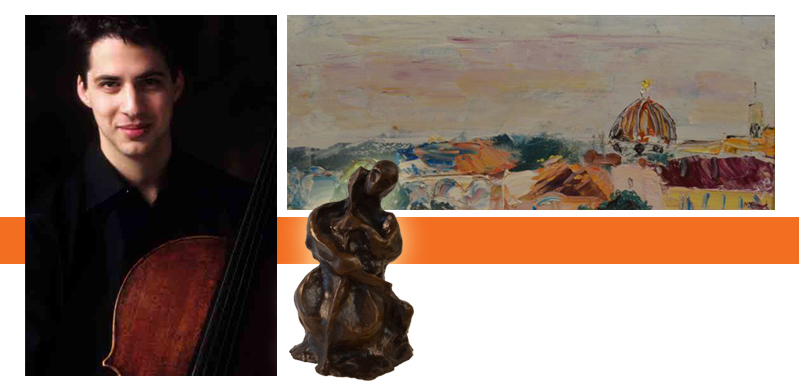
Nathaniel Boyd – Artist & internationally recognised classical cellist

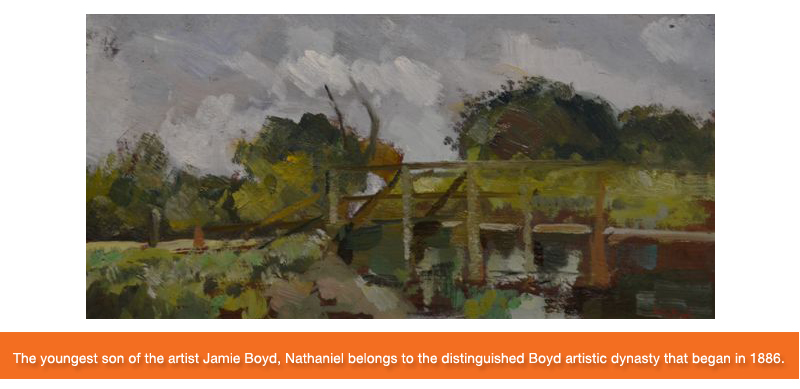
The youngest son of the artist Jamie Boyd, Nathaniel belongs to the distinguished Boyd artistic dynasty that began in 1886.  Tutored by his father Jamie Boyd, an acknowledged master colourist, Nathaniel is equally talented across a wide variety of mediums, sculpture, gouache, pastel and oil on canvas and board.

Nathaniel draws artistic inspiration from the cityscapes and landscapes he encounters on his travels around the world.  Like his father Jamie Boyd and his grand-father Arthur Boyd, Nathaniel also spends time in Bundanon by the Shoalhaven River where he is inspired by the dramatic landscape.

Nathaniel is currently part of the Boyd Dynasty Exhibition – June 2012 – at Red Hill Gallery.The very talented Nathaniel also enjoys an international reputation as a classical cellist, performing at the world’s most prestigious venues.  He is a passionate and dedicated musician who combines a busy chamber music career with frequent solo engagements. He studied at the Junior Guildhall and the Royal Northern College of Music with Hannah Roberts and Ralph Kirshbaum, graduating in June 2005 with First Class Honours, a PPRNCM (Distinction) and the Leonard Rose Prize.

He went on to Postgraduate study at the RNCM and recently graduated with a starred first in performance.  Nathaniel has participated in master classes with Mstislav Rostropovich and Bernard Greenhouse amongst others. He appears regularly as both a recitalist and with orchestra, most recently performing Shostakovich’s First Cello Concerto and Brahms’ “Double” Concerto with violinist Marije Ploemacher and the Royal Northern College of Music Symphony Orchestra.

Posted in Uncategorized | Comments Off on Nathaniel Boyd – Artist & internationally recognised classical cellist

The Boyd Family Dynasty

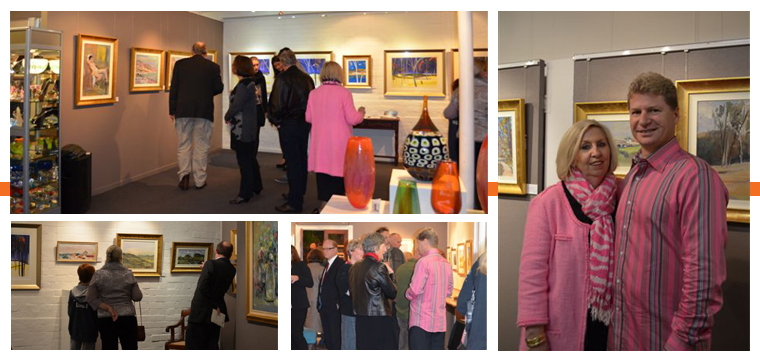
The opening night of Red Hill Gallery’s current exhibition “Jamie Boyd’s Family Dynasty ” received impressive comments and overwhelming interest from the guests.  The rainy weather did not deter gallery goers as the space soon filled with an eclectic mix of people from the Brisbane art scene, including the well known director and head curator of the gallery Margaret Campbell-Ryder, artist Todd Whisson and a number of judiciary, medical professionals and business executives from the pointy end of town.

While sipping on French champagne and enjoying the light refreshments many of the guests were overwhelmingly impressed by the contextual background provided by a commercial gallery.  With never before seen works by Emma Minnie Boyd (1858-1936), Merric Boyd (1888-1959) and Arthur Boyd (1920-1999) on loan to the gallery from the Boyd family archives.  One gallery goer commented “to be able to see the five generations of the Boyd family in the same room is an impressive feat and really drives home the extraordinary history and talent within the Boyd family, as well as providing a poignant reminder of the importance of this family within Australia’s art history.”

Ashleigh Clarke

Posted in Uncategorized | Comments Off on The Boyd Family Dynasty

Five Generations Hanging On The Walls – Dan Nancarrow June 2, 2012

Comparing the artworks of five generations of his family, Jamie Boyd says the differences in each artist’s works say more than the similarities.

“I was looking at a water colour by [great-grandmother] Emma Minnie and it is very similar to my son Nathaniel’s oil painting,” he said.

“They both have very sensitive, almost fragile, handling of the paint. There’s a quality that comes across, a kind of mood.

Great interview with Jamie Boyd by Dan Nancarrow here.

Foot note: Jamie Boyd is the most important living artist of the Boyd artistic family. He is represented in important collections around the world including Queen Victoria Museum Gallery England, The Tavistock Centre London National Gallery of Australia, and the National Gallery of Victoria

Posted in Uncategorized | Comments Off on Five Generations Hanging On The Walls – Dan Nancarrow June 2, 2012

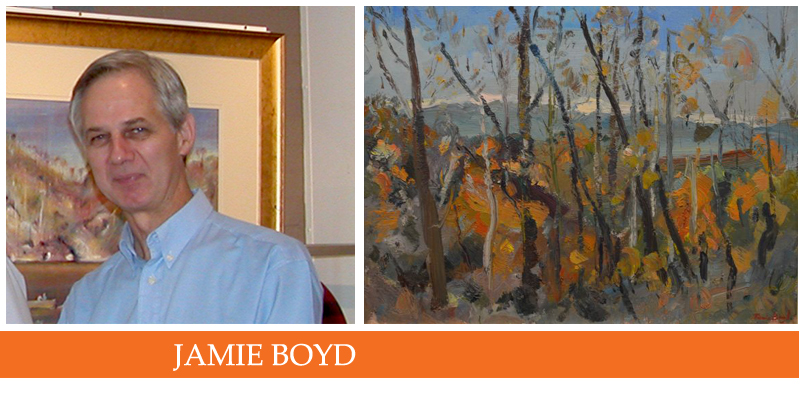
ArtChat [Blog Interview Number 10] – Jamie Boyd

This month we present an insight into the life and world of Jamie Boyd a 5th generation Boyd from a family of artists considered as art royalty in Australia with a heritage of artists dating back to the early 1800 hundreds

Jamie Boyd is a magnificent craftsman and colourist whose observation of his subject matter is touched by the light and atmospherics then expressed in his exhilarating visions.  He is constantly challenging and redefining his knowledge of art through experimentation and reinvention resulting in his intense, lyrical paintings.

Now living in London with his family, Jamie has gained international standing for his own creative talent and distinctive style.  On a recent visit to Australia Jamie had a successful exhibition, opened by former Australian Prime Minister The Hon Bob Hawke AC, at the famous Boyd Bundanon Estate.

This exhibition followed on from a successful show in London which was opened by the Australian High Commissioner. 

AC:  What inspires you to create?
JB: 
The intuition that there is something new to be discovered

AC:  In three words describe your art
JB: 
search for beauty

AC:  How do you spend your leisure time?
JB:
attempting to play the piano

AC: Who is your role model or person you most admire?
JB:
Vincent van Gough, Arthur Boyd

AC:  What music do you listen to while you create?|
JB: 
Bach to Fats Waller (more or less anything played with passion)

AC:  What was the last book you enjoyed?
JB: 
The Clergymans’ Daughter by George Orwell

AC:  What does your art mean to you?
JB:
Takes me out of myself

AC: Growing up with so many famous artists is there any particle memorable moment you would like to share with us?
JB: 
Painting by the river with my father I glanced across at the small canvas he was working on – so accurately had he captured the spirit of the scene it was as if he’d dipped his brush into the landscape itself or chipped off bits of the sky, rocks and river.
Born in Melbourne, Jamie moved to London with his family as a young boy. At the age of seventeen he began painting full-time in London and held his first Australian exhibition in 1966 at the Bonython Galleries in Adelaide. Since then, he has exhibited regularly in Australia in addition to showing his work in England, Italy, Germany and Holland. His work is represented in major collections throughout the world.

Jamie Boyd will present a collection of his work, exhibiting with his compliments, there will be five (5) generations of the Boyd Dynasty on show at Red hill Gallery.  Along with his son Nathaniel Boyd  and his father Arthur Boyd AO   we will also have on show works by his grandfather Merric Boyd and his great grandmother Emma Minnie Boyd. 

The Boyds – An artistic Dynasty  since 1858 an inspiring and creative family
You can read Jamie Boyds extensive CV here.

Posted in Uncategorized | Comments Off on ArtChat [Blog Interview Number 10] – Jamie Boyd

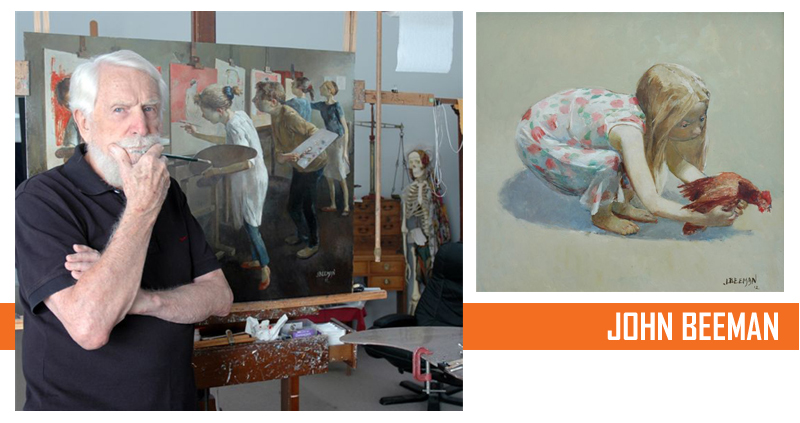
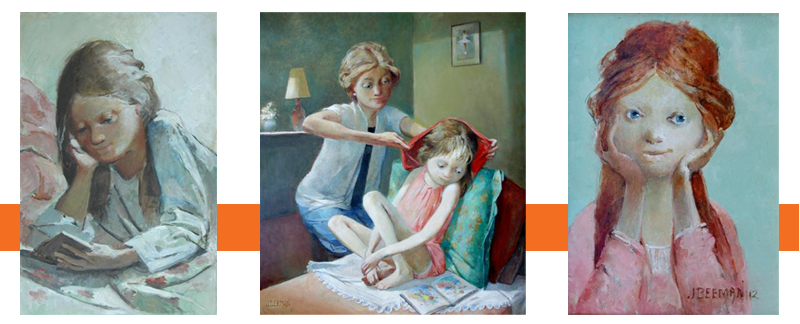
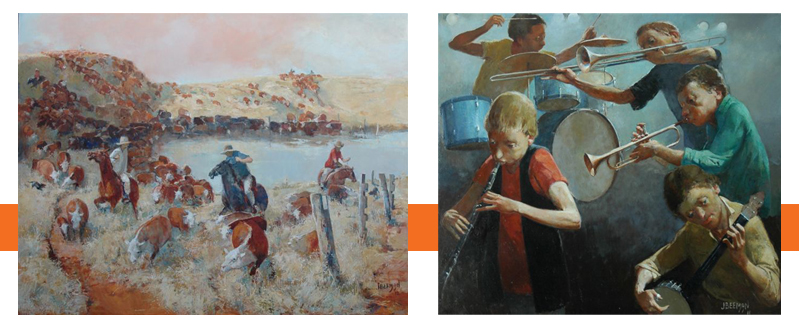
Oil on gesso by John Beeman.

On the eve of the opening of his major solo exhibition, we thought we would revisit the technique used by John Beeman in his work.  A difficult and unforgiving technique that he makes look effortless; gesso is a traditional method used in Europe around the Renaissance era and is almost a forgotten art.  His special skill is defining the subtle interplay of personalities and encapsulating that moment in oil on gesso.

Visit the exhibition on line John Beeman Exhibition Red Hill Gallery.

John Beeman - Oil on Gesso - A Simplified Explanation

John Beeman - Oil on Gesso - A Simplified Explanation of Gesso - As a Ground for Painting

Apart from painting on walls, artists have been very limited in their choice of surface on which to paint.

There are two main surfaces which have remained unchanged for several hundred years. These are: – a fabric, usually canvas, stretched on a timber frame or a wooden panel. Both have to be coated with a primer, usually a white paint or gesso. Both of these have the added advantage of being portable. Each of the above have disadvantages as follows: – The flexible nature of the canvas has the potential to crack the paint surface and it is vulnerable to cuts and bumps and humidity and unstable atmosphere can have a harmful effect
on the painting.

Timber panels are limited in size, subject to warping and splitting and attacks by insects (borer and woodworm.)

Modern technology has produced materials that are dimensionally and chemically stable and can be obtained in large sheets. They suffer few of the disadvantages of canvas or timber.

During the years that I was doing my Post Graduate Studies in London at the Slade School of Fine Art. I was aware that while I was receiving a thorough grounding in the skills of drawing and painting, the information on painting materials was superficial and largely dependent on the range of choices in the art material suppliers.
I applied for one of the few positions at the prestigious Courtauld Institute. I was fortunate to be accepted, with three other like-minded students, to be trained in their laboratories in the chemistry and structure of painting. A further stroke of luck was at that time a Dutch conservator was working at the Courtauld Institute restoring a Flemish Painting for the National Gallery. He was an expert in the preparation of gesso and was keen to share his knowledge.

On returning to Australia I made gesso in the ‘time-honoured’ method, preparing the gesso with rabbit skin glue and calcium carbonate. There were five or six coats brushed on with a large flat brush, each at right angles to the last. The temperature of the gesso mixture had to be maintained within critical limits, allowed to set but not dry. In all
there were sixteen steps and it was very time consuming.

I continued preparing gessos this way until my son David developed equipment which was capable of applying the hot mixture while maintaining the critical temperature and viscosity.

The structure of the surface is all one could wish for and is physically and chemically stable.

The white gesso has great optical qualities reflecting the light back through paint layers. It is rugged and stands a certain degree of aggressive technique or a sensitive response to a fine application of glazes.

As well as oils these gessos can also be used for egg tempera or acrylic.  John Beeman

John Beeman
John Beeman - Exhibiting at Red Hill Gallery - May 2012
Posted in Uncategorized | Comments Off on Oil on gesso by John Beeman.

Jamie Boyd – CV

Jamie Boyd comes from at long line of famous artists. History confirms that the Boyd Family collectively have made a very profound and well-documented contribution to Australian art dating back to the nineteenth century.

Born in 1948 in Murrumbeena Victoria, the son of Arthur Boyd and nephew of David, his world has always been surrounded by art and creativity. From this solid foundation Jamie has taken his own work to new heights to become a truly unique artist in his very own right.

At age seventeen he embarked on a full time career as an artist and studied at the Michael Karolyi Foundation in southern France. He held his first solo exhibition in Adelaide in 1966 and has subsequently held exhibitions throughout Australia, Italy, Germany, Holland and England.

He has lived most of his adult life in London, returning to Australia periodically. His distinctive work thus reflects both the enduring influences of the Australian landscape and a broad international sensibility.

“There is a fundamental difference between a person’s perception of a cypress-studded horizon in Tuscany and the same person’s idea of the Australian bush landscape. The European landscape evokes intrinsic harmony whereas the Australian does not. One is made to feel intrusive; the bush’s intimate fragility is disquietingly unfamiliar.”

‘There is a dream-like quality throughout Jamie’s work.  He is an enthusiastic painter of the landscape and the figure, constantly challenging and redefining his knowledge of art through experimentation and play.’

Jamie currently lives in London with his wife and five children.

EXHIBITIONS

1966                  Bonython Galleries, Adelaide

1967                  Australian Galleries, Melbourne

1968                  Bonython Galleries, Sydney

1969                  Drian Galleries, London, England

Von Bertouch Galleries, Newcastle

1970                  Australian Galleries, Melbourne

Bonython Galleries, Adelaide & Sydney

1971                  Clytie Jessop Gallery, London, England

Von Bertouch Galleries, Newcastle

1972                  Drian Galleries, London, England

Australian Galleries, Melbourne

1973                  Skinner Galleries, Perth

1976                Von Bertouch Galleries, Newcastle

Gallerie Kuppers, Neuss, Germany

1977                Gallerie d’Eendt, Amsterdam, Holland

1978                Fine Arts Gallery, Perth

1979                Rex Irwin Gallery, Sydney

1980                Australian Galleries, Melbourne

New South Wales House, London, England

David Ellis Fine Art, Ballarat

1981                Phillip Bacon Gallery, Brisbane

1982                Australian Galleries, Melbourne

Holdsworth Gallery, Sydney

Bonython Galleries, Adelaide

1984                Barry Stern Gallery, Sydney

1985                David Ellis Fine Art, Ballarat

Cariaggio Gallery, Palaia, Italy

1986                Bonython Meadmore Gallery, Adelaide

Beaver Galleries, Canberra

1987                New South Wales House, London, England

1988                Boundary Gallery, London, England

Savill Gallery, Sydney

Schubert Gallery, Surfers Paradise

New South Wales House, London, England

1989                Palazzo Strozzi, Florence, Italy

1990                Boundary Gallery, London, England

Beaver Gallery, Canberra

Christchurch Mansion, Ipswich, England

1992                Gillian Jason, London, England

1993                Aviva Campbell Gallery, Windsor Hotel, Melbourne

1994                Corbally Steurton, London, England

Red Hill Gallery, Brisbane

1995                Chappel Galleries, Essex, England

Eva Breuer, Sydney

1996                Stair Gallery, London, England

Red Hill Gallery, Brisbane

Galleria Aniela Fine Art, Kangaroo Valley, NSW

“People, Places, Landscapes” Aviva Campbell Gallery, Melbourne

1997                “Reaching Beyond Time” Galleria Aniela Fine Art, Kangaroo Valley, NSW

“Encounters with Prints” Aviva Campbell Gallery, Melbourne

1999                Savill Gallery, Sydney

2000                Red Hill Gallery, Brisbane

2002               Rebecca Hossack Gallery, London, England

Red Hill Gallery, Brisbane

Greythorn Galleries, Melbourne

2004               Red Hill Gallery, Brisbane

Greythorn Galleries, Melbourne

2005               Chappel Galleries, Essex, England

2007               Red Hill Gallery, Brisbane

Greythorn Galleries Melbourne

2009              Christopher Day Gallery Sydney

Red Hill Gallery, Brisbane

2010                Red Hill Gallery, Brisbane

2012               Red Hill Gallery, Brisbane

PUBLICATIONS

‘Dictionary of Australian Art’, Alan McCullock

‘Australian Art 1975-1980’, Kim Bonython

‘The Art of the Boyds’, 1979 P Dobrez / P Herbst

‘Creating of Self Portraite’, T Coates / M Beazley

‘New Art Four’, Nevill Drury

‘An Antipodean Connection’ G Prampolini / MC / Hubert / Slatkine / Geneve

‘Modern Painters Autumn ‘92’

Boyd Dynasties ABC Television 2006

WORKS IN PUBLIC COLLECTIONS

Artbank Australia, Mertz Collection, U.S.A, University of South Australia, University of Western Australia, Queen Victoria Museum and Art Gallery, Launceston, B.H.P Australia, Boxer Collection, Australia, Tavistock Centre, London, UK, National Gallery of Victoria, Council of Adult Education, Guildhall School of Music & Drama, London, UK

Posted in Uncategorized | Comments Off on Jamie Boyd – CV

ArtChat [Blog Interview Number 9] – Mel Brigg

This month we present an insight into the life and world of internationally acclaimed artist Mel Brigg.  Mel will show his latest collection in April in a major exhibition titled “Beyond The Realms” – a compelling look at the artist and his work.

Mel Brigg is a self-taught, professional artist who commenced his painting career in 1970. As well as having exhibited in England, Portugal and Singapore, he has had numerous solo and joint exhibitions in South Africa and Australia. His collections of works are held by numerous major international companies worldwide plus several South African Embassies as well as the Queensland State Government.

Mel is a great supporter of various international charities including Care Australia, World Wildlife TrustWildlife presentation Society of QLD, to name just a few.  Mel’s artwork was used for the main promotional material during the visit to Australia by Pope Benedict IX for the Mary MacKillop Foundation.  Mel was the founder of the Swellendam Art Society in South Africa.

“This current collection can only be described as hauntingly beautiful.  When you view a painting by Mel Brigg you are drawn into the subject, thereby discovering the powerful message that the artist is portraying. This exhibition has exceeded all my expectations of this very talented artist with his diverse selection of subject”.  Margaret Campbell-Ryder, Director, Red Hill Gallery
Mel Brigg Exhibiting April 2012 at Red Hill Gallery

Mel Brigg Exhibiting April 2012 at Red Hill Gallery

AC:     What inspires you to create?
MB:
    The excitement at seeing a blank canvass develop into something many may enjoy.

AC:     In three words describe your art.
MB:
    Hopefully, thought provoking landscapes…..sorry that’s 4

AC:     How do you spend your leisure time?
MB:   
With family and good friends chatting and enjoying fine food. Mowing 1,5 acres of lawn, that one see’s growing as I mow!

AC:     Who is your role model or person you most admire?
MB:
    Vincent van Gogh had the most horrific life but continued to create masterpieces (and my wife, because without her I would have no ears)

AC:     Share something with us about yourself that we don’t know.
MB:   
My Father was absolutely against me painting as a career and because I persisted, I was alienated for some years.  I was a troop leader in the Boy Scouts, a gunner in the South African Navy, a dairy farmer, an olive farmer, had a gift shop and weaving factory and bred my own Angora goats for their hair!

Ran an illegal pre-school for 120 African kids, during the Apartheid era…..fostered kids from St George’s Boys Home in Johannesburg.

I was also involved in the rehabilitation and welfare of ex of prisoners from Polsmor Prison in Cape Town.

Was actively involved in the organisation called Parents Of The Detainees …….looking after African families whose breadwinners were incarcerated for so called crimes against the state.

AC:     What music do you listen to while you create?
MB:    A
nything …..except those screeching opera singers, and country music about their horse that died ! (AC: We hear you!)

AC:     What was the last book you enjoyed?
MB:
    A novel on the Rhodesian war called…….. ‘Let’s Not Go To The Dogs Tonight’

AC:     What does your art mean to you?
MB:   
Everything, I cannot imagine life without painting! I am in a constant artistic blur! (So my wife and kids tell me.)

AC:     In your work there is often a circle around a figure. Can you tell us what this represents?
MB:
    It highlights that person, his feelings of angst, arriving in a new strange land, and being different, as if in the spotlight, and being scrutinised by the locals (myself included.)   Until I discovered the SWANS…… the MAGPIES- ETC were not in fact endangered birdlife!

AC:     You were born in South Africa, what made you decide to make Australia your home?
MB:
    Most law abiding people would leave if they could…it was the hardest decision I’ve ever had to make in my life, but we saw no future there for our children.

But, I know now,…..the best decision I’ve ever made……this is our home!

THANK YOU AUSTRALIA

Mel Brigg - Exhibition April 2012 at Red Hill Gallery

Mel Brigg - Exhibition April 2012 at Red Hill Gallery

Posted in Uncategorized | Comments Off on ArtChat [Blog Interview Number 9] – Mel Brigg

ArtChat [Blog Interview Number 8] – Danielle McManus

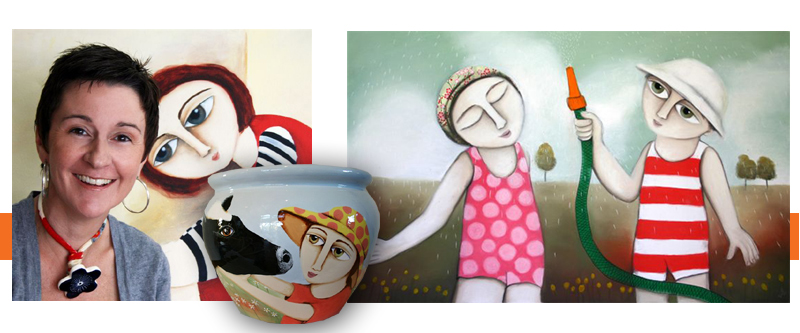
Danielle McManus intertwines experiences from everyday life with her Maltese heritage to produce superbly whimsical artworks & ceramics.

Whether fictional or based on real-life family events, Danielle’s love of storytelling is evident in her colourful, figurative offerings that provide viewers with thought-provoking images frequently set against a backdrop of Mediterranean landscape.

Danielle holds a Bachelor of Arts (Visual Arts) from Newcastle University, Australia.

AC: What woman is most influential to your artistic life?
DM: Ive always admired Frida Kahlo, Mirka Mora and Margaret Woodward

AC: What activity makes you lose track of time?
DM:  Creating – whether its painting, sketching anything art!

AC: What makes you smile?
DM:  My kids make me smile – they are a big inspiration to me!

AC: What inspires you to create
DM:  My kids, nature, life in general!

AC: In three words describe your art
DM:  Colourful, happy, quirky

AC: Tell us something we don’t know
DM:  When I was at school I was going to study to be a vet! Um…sort of changed tack!!

AC: What is your goal in life
DM:  To keep doing what I am doing. It’s a great job!

Danielle McManus - Her colourful, figurative offerings provide viewers with thought-provoking images.

Danielle McManus - Her colourful, figurative offerings provide viewers with thought-provoking images.

Danielle is exhibiting at Red Hill  Gallery as part of the Women of Substance show. You can view that collection online here.

Posted in Uncategorized | Comments Off on ArtChat [Blog Interview Number 8] – Danielle McManus

ArtChat [Blog Interview Number 7] – Julie Hutchings

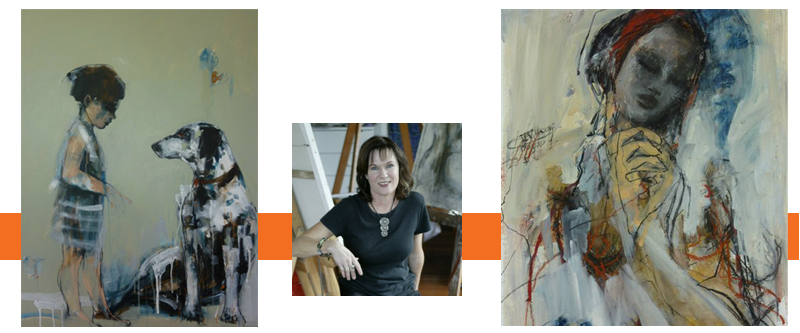
Julie Hutchings is an emotional painter her aim is to create work with energy and movement. Her studies of the human form exhibit energy, passion and relate a story of the moment with character and soul that she brings to her work.

AC: What woman is most influential to your artistic life?
JH: I cannot say there is one woman ..however I am influenced every day creatively by many…my work is generally very feminine with an undercurrent of courage & strength simmering beneath the surface.

AC: What activity makes you lose track of time?
JH: Painting and drawing

AC: What makes you smile?
JH: Nature and animals and life in general.

AC: What inspires you to create
JH: I find inspiration everywhere…from music,poetry..life stories..The need to create is like a drug…addictive…I live to paint.

AC: In three words describe your art
JH: Emotive, energetic and expressive.

AC: Tell us something we don’t know
JH: We should always keep a little mystery about ourselves.

AC: What is your goal in life
JH: My goal in life is to be a  thoughtful, good person, create paintings that people respond to and enjoy this beautiful life with my family.

Julie HUTCHINGS Is an intuitive artist who paints with tremendous energy & expression.

Julie HUTCHINGS Is an intuitive artist who paints with tremendous energy & expression.

View Julie’s current exhibition at Red Hill Gallery HERE.

Posted in Uncategorized | Comments Off on ArtChat [Blog Interview Number 7] – Julie Hutchings

ArtChat [Blog Interview Number 6] – Emma Sheldrake

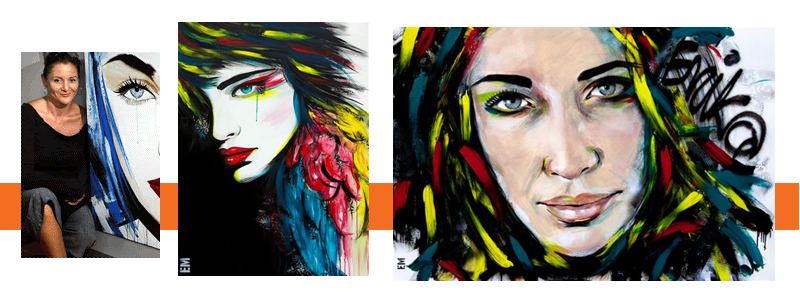
Emma Sheldrake’s signature style drips with seductive intent, blending figurative art with the mischievousness of Pop Art and the subtleties of eroticism.  Bold colour combinations, daring brush strokes, irreverent drips and enticing eyes define the power of her images to seduce the onlooker.

AC: What woman is most influential to your artistic life?
EM: My mother who is creative herself and has always supported that direction in my life.

AC: What activity makes you lose track of time?
EM: Painting & surfing.

AC: What makes you smile?
EM: My partner, a good joke, children.

AC: What inspires you to create
EM: Starting with nothing and ending with something.

AC: In three words describe your art
EM: Spontaneous, bold, pop

AC: Tell us something we don’t know
EM: I am a mad cook & gardener.

AC: What is your goal in life
EM: To create, to love, be happy & be myself

Emma Sheldrake - Exhibiting February 2012 - Women with Substance - Red Hill Gallery

Emma Sheldrake - Exhibiting February 2012 - Women with Substance - Red Hill Gallery

Em is fast gaining recognition for her unique style of painting and is now represented in Brisbane exclusively by Red Hill Gallery.  You can view her current exhibition online here.

Posted in Uncategorized | Comments Off on ArtChat [Blog Interview Number 6] – Emma Sheldrake

Hot On The Walls – February 2012 – Dean Reilly

Who is hot on our walls this month? – Dean Reilly!

"My art is a commitment to craft, a commitment to design and a commitment to expand the knowledge of what we see as beauty." Dean Reilly

"My art is a commitment to craft, a commitment to design and a commitment to expand the knowledge of what we see as beauty." Dean Reilly

We are so excited at Red Hill Gallery to welcome Dean Reilly to our Gallery.

In 2010 Dean Reilly was a finalist in both the Archibald Prize and Doug Moran Portrait Prize, arguably the most prestigious art prizes in Australia.  He also made the 2011 Doug Moran final.

His works have been shown in the New South Wales Art Gallery, New South Wales State Library, The German Embassy and many prestigious private collections.

His works are highly acclaimed for their style, design and variation.  His commitment to quality is outstanding and his constant search for the epic theme has an enduring
presence.

He continues to delight and inspire collectors around the world with his
unique approach to painting, come in and see his work soon at the Red Hill Gallery – or view them online here.

Posted in Uncategorized | Comments Off on Hot On The Walls – February 2012 – Dean Reilly

There is more to working in an art gallery than you think – Louise Clark Bachelor of Creative Industries (Visual Arts/ Art History) at Queensland University of Technology.

Welcome to 2012!  Here is a blog written by Louise Clark who did her internship with us at Red Hill Gallery.   We all loved working with her and hope she got a lot out of her time with us and we wish her all the best with her assured future in the arts.

There is more to working in an art gallery than you think.

To complete my degree I had to complete an internship working within a company business that somehow incorporated the skills learnt during my degree, so I naturally thought an art gallery would be the best place. There are many types of art gallery and I wanted to utilise this internship by experiencing an area I hadn’t explored before. I chose the Red Hill Gallery because I had never worked in a commercial retail environment and wanted to challenge myself and see if that industry suited me. My position during the internship was working as part of a team in the independent commercial retail Red Hill Gallery, which the journal article Economics of the Art Market defines as “The art market is characterized by a hierarchy of sub markets. At the first stage sometimes called the primary market, individual artists provide works to galleries, local art exhibitions, or directly to find consumers…” defined by Gerard-Varet (1995, 511). During my time at the Red Hill Gallery I realised there is more to working in an art gallery than you think. It’s not just sitting around all day talking about art, but much, much more. I learnt many new skills during my internship including different hanging systems, making displays, how to store artworks, marketing, the filing systems and the use of stock takes and different sales techniques.

One might think selling art is just the same as selling any other consumer product however it is not, as according to Reinstaller, Schonfeld (2007, 1) “The crucial distinction between art and other consumption goods is that the quality of an artwork cannot be objectively determined. Instead, the value of art is socially constructed.” In knowing this it was interesting to see how each person in the gallery approached selling art in different ways. One of the things I learnt along the way was that it’s not just about how you talk to clients; selling art combines many skills together like marketing, art history, hanging and creating merchandised displays, etc. This can be described as an ‘interdisciplinary’ approach as defined by Repko (2008, 5) “The word interdisciplinary consists of two parts: inter and disciplinary. The prefix Inter means “between, among, in the midst.” Disciplinary means “of or relating to a particular field of study” or specialisation. So a starting point for the definition of interdisciplinary is “between fields of study” (Stember, 1991, p.4). Inter also means “derived from two or more,” for example; it starts by using art history knowledge in choosing which artists are to show in the gallery then displaying the artworks in complimentary ways (by using light and making sure the artworks around work together) which lets the clients sees what real potential the artwork has. The marketing brings the people into the gallery and a bit of art history knowledge and sales technique complete the original aim – selling art.

Although I didn’t complete the aim during my internship by selling an artwork, I think I helped with a few. Most importantly I learnt a lot of new skills and made some new friends along the way. To the team at the Red Hill Gallery, Thank You. J

References

Caplin, L. 1998.  The Business of Art. 3rd ed. USA: Prentice Hall Inc.

Chong, D. and Robertson, I. 2008. The Art Business. NewYork: Routledge.

Gerard-Varet, L. 1995. “ Economics of the Art Market. On pricing the priceless: Comments on the     economics of the visual art market.” European Economic Review. 39 (3-4): 509- 518.

Gillmore, J. and Pine, J. 1999. The Experience Economy: work is theatre and every business a stage. Boston: Harvard Business School Press.

Reinstaller, A. and Schonfeld, S. 2007. “ The effects of gallery and artist reputation on prices in the primary market for art: a note” Journal of Culture Economics.  31 (2): 143-153.

Repko, A. 2008. Interdisciplinary research. Thousand Oks: Sage Publications Inc.

Louise Clark - Louise Clark Bachelor of Creative Industries (Visual Arts/ Art History) at Queensland University of Technology and amazing Cirque performer

Louise Clark - Louise Clark Bachelor of Creative Industries (Visual Arts/ Art History) at Queensland University of Technology and amazing Cirque performer

Posted in Uncategorized | Comments Off on There is more to working in an art gallery than you think – Louise Clark Bachelor of Creative Industries (Visual Arts/ Art History) at Queensland University of Technology.

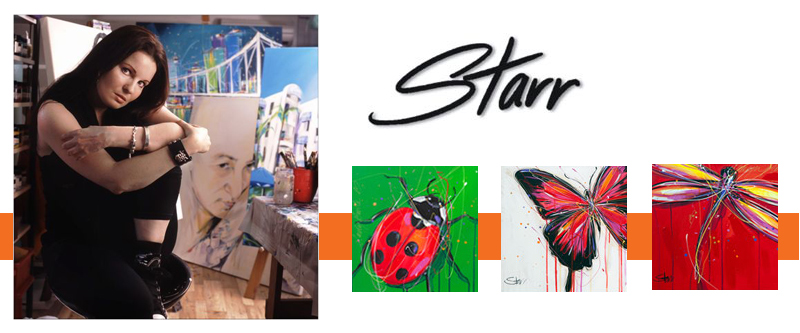
ArtChat with Starr [Blog Interview Number 5]

Starr is a ‘New Traditionalist’, combining traditional themes with her own contemporary style. Starr’s paintings are intensely personal and are as much the work of a devotee of popular culture as they are of the artist/observer.

Starr - A New Traditionalist

Starr - A New Traditionalist

Artchat asks this Hot Young artist to reveal a little of herself.

AC: What is your favourite Christmas memory?

S:  There are too many great Christmas memories as I love the Christmas season. My favourite recent memory was when I finally found the perfect tree, a black tree with technicolour decorations and lights. It’s the perfect of expression of me and my art!!

AC:  What inspires you to create?

S: I am constantly inspired by the world around me. In my imagination, the people and places I meet and visit become part of my life and it gives me great pleasure to see them come to life on canvas.

AC:  In three words describe your art

S: Colour, Passion and Fluidity

AC:  How do you spend your leisure time?

As an artist I am drawn to all expressions of art. I love the theatre, the ballet or just going along to see my favourite bands perform. As an artist I have been lucky enough to travel. Having seen the ballet in Paris and my favourite 80’s rock bands in Hollywood, are among my most treasured memories; though I have to admit that I am a huge fan of Science Fiction. You can always catch me around my home watching BattleStar Galactica, whether I’m laying in bed or painting!!

AC: Who is your role model or person you most admire?

S: I can honestly say that my Grandfather is the person who has meant the most to me. He was an amazing man, always giving his time (and money) to others.  My Grandmother too is an inspiration, she’s wheelchair bound now, but still feisty, happy and full of life. Her spirit is contagious and I love to visit her every week.

AC:  Share something with us about yourself that we don’t know

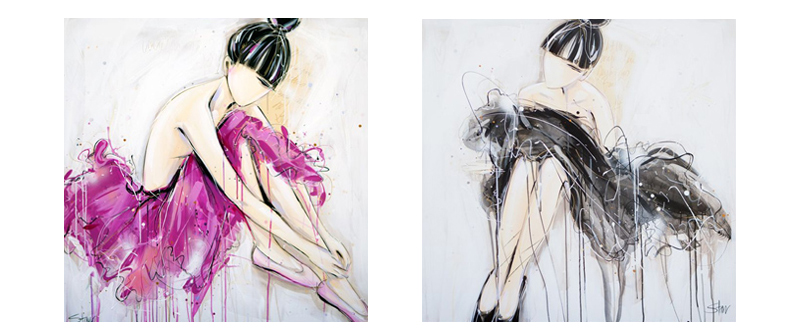
S: Well, you probably don’t know that as a child I had to make a decision between art and ballet lessons. I chose art, but I always wondered what it would be like to dance in a ballet. I think that comes through in my paintings as I seek to recreate the fluidity and grace of the dancer in my work.

Starr --- Beyond Pink --- Black Swann ---  Starr's work is available for purchase at Red Hill Gallery

Starr --- Beyond Pink --- Black Swann --- Starr's work is available for purchase at Red Hill Gallery

AC:  What music do you listen to while you create?

S: As you probably realise, I am a Rock Chick. I love the music of the 80’s and the over the top ‘glam bands’ like Bon Jovi, Aerosmith and Poison never cease to inspire me.

AC:  What was the last movie you enjoyed?

S: Ironically enough, I would have to say that Tim Burton’s ‘Alice in Wonderland’ is probably the best I have seen for a while. He’s a great director and I’m a huge fan of his visual aesthetic.

AC:  What does your art mean to you?

S: Art is my life. It’s all I have ever done and all I know. Each painting is an expression of my passion and joy in life. Without art, I cannot imagine what I would do.

Conclusion:

I think to sum up my work in one sentence is impossible, but my love of art is what drives my painting. I draw great inspiration from the Masters like Monet and Picasso, but my work has always sought to have its own voice. I take great pride in every painting I do and it is humbling to know that my work is hung in so many wonderful places in the world.

Starr

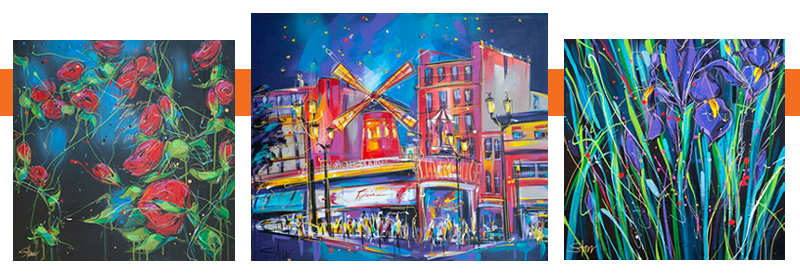
Starr  -- Roses are Red -- Moulin Rouge -- Iris -- Starr's work is available at Red Hill Gallery | Brisbane

Starr -- Roses are Red -- Moulin Rouge -- Iris -- Starr's work is available at Red Hill Gallery | Brisbane

View Starr’s work here

Posted in Uncategorized | Comments Off on ArtChat with Starr [Blog Interview Number 5]

ArtChat with Lucette Dalozzo [Blog Interview Number 4]

This month we present an insight into the life and world of artist Lucette Dalozzo.

Exploring ones vivid imagination and understanding the essence of dreams is Lucette Dalozzo’s distinction in Art. Vibrant, intense and enchanting are just a few ways to describe her compositions, combining oils, acrylics and inks into a symphony of hypnotic melodies;  From music to dreams, Lucette possesses a unique method of interpretation and understanding, bringing to light the finer details one might ordinarily miss. There is a wealth of inspiration circulating the depths of Lucette’s imagination, which leaves you delightfully eager for her masterpieces.

Lucette Dalozzo Exhibiting at Red Hill Gallery December 2011 www.redhillgallery.com.au

Lucette Dalozzo Exhibiting at Red Hill Gallery December 2011 www.redhillgallery.com.au

AC:  What inspires you to create?

LD: My children, the view of the world, music, travels and largely from my inner imagination. Pushing the boundaries for example my technique is not restricted to a certain style, if I like doing it, i’ld do it. It’s never bothered me, and I think finally it’s paid off. At 67, I’m still experimenting and enjoying it.

AC:  In three words describe your art

LD: Beautiful, Fun and Fresh.

AC:  How do you spend your leisure time?

LD: Painting, enjoying my grandkids and reading biographies.

AC: Who is your role model or person you most admire?

LD: Picasso. From his first painting to the last it was never the same, never afraid to change styles. He pushed the boundaries. The passion that Picasso felt for what he was creating shines through. Incredibly inventive and with a prolific output – he stayed several steps ahead of everyone else right up to the end of his life. From his journey I take new ways of seeing things in order to progress.

AC:  Share something with us about yourself that we don’t know

LD: I am superstitious and follow astrology. It doesn’t rule my life but it does affect me and inevitably my work.

AC:  What music do you listen to while you create?

JC: Joe Dassin, Edit Piaf, Jaques Brel and Andrea Bocelli

AC:  What was the last book you enjoyed?

LD: Gerald Stone’s “Compulsive viewing – the inside story of Packer’s Nine Network.” He pushed his people a step beyond what common sense told them was attainable. He was hard working and felt passionate about everything he did.

AC:  What does your art mean to you?

LD: It’s my way of life, my drug and my passion. I live and breathe it. I see art as an exploration. It’s a journey into the unknown. I am constantly in search of myself more than anything else, I get stimulation from the changes in my life.

AC:  You were born in Belgium, what made you decide to make Australia your home?

LD: I followed my husband to live a new and better life for myself and my kids under the sun. I don’t think I would be painting and creating beautiful things and enjoying my life everyday if I had stayed in Belgium.

AC: You studied art at the “Academy of Fine Art,” Mons, tell us about that time

LD:  “ICET” at La Louviere, Belgium was where my passion for art first started. Learning the techniques of window dressing allowed me to later become the first woman window dresser for Target in Australia. It was loads of fun, constantly surrounded by talented artists and teachers.

Lucette Dalozzo graduated from the Academy in 1967; then proceeded to grace some of the finest department stores with her unique style.  After marrying her husband Louis she was eager to travel, so they  embarked on a journey that would change their lives forever.   Australia was a golden thread that Lucette used to weave her artistic penchant.  She quickly became recognised for her Romantic Impressionism which drew art enthusiasts worldwide. Throughout the 70’s and 80’s she exhibited in the USA, French Polynesia, Belgium and every state in Australia.  She was represented by the Australian and Swiss Embassy’s in Brussels, the Consul General for Belgium in Sydney, Countess D’Outremont, Belgium, Sir Barnaby Joyce Collection, Sydney, Danny Larue and copious private and corporate collections worldwide.

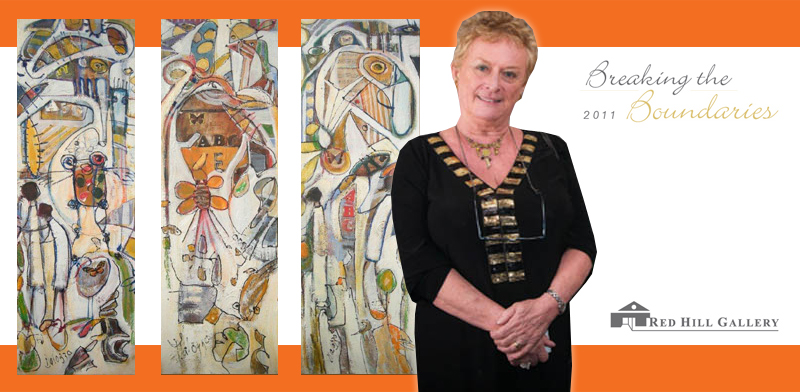
Lucette will show her latest collection in December in an exhibition titled “Breaking the Boundaries” proudly exhibiting along with her Husband Louis Dalozzo and daughter Judith Dalozzo.   Lucette is celebrating being with Red Hill Gallery since it’s opening some 25 years ago.   You can view Lucettes work here.

Lucette Dalozzo

Lucette Dalozzo

Posted in Uncategorized | Comments Off on ArtChat with Lucette Dalozzo [Blog Interview Number 4]